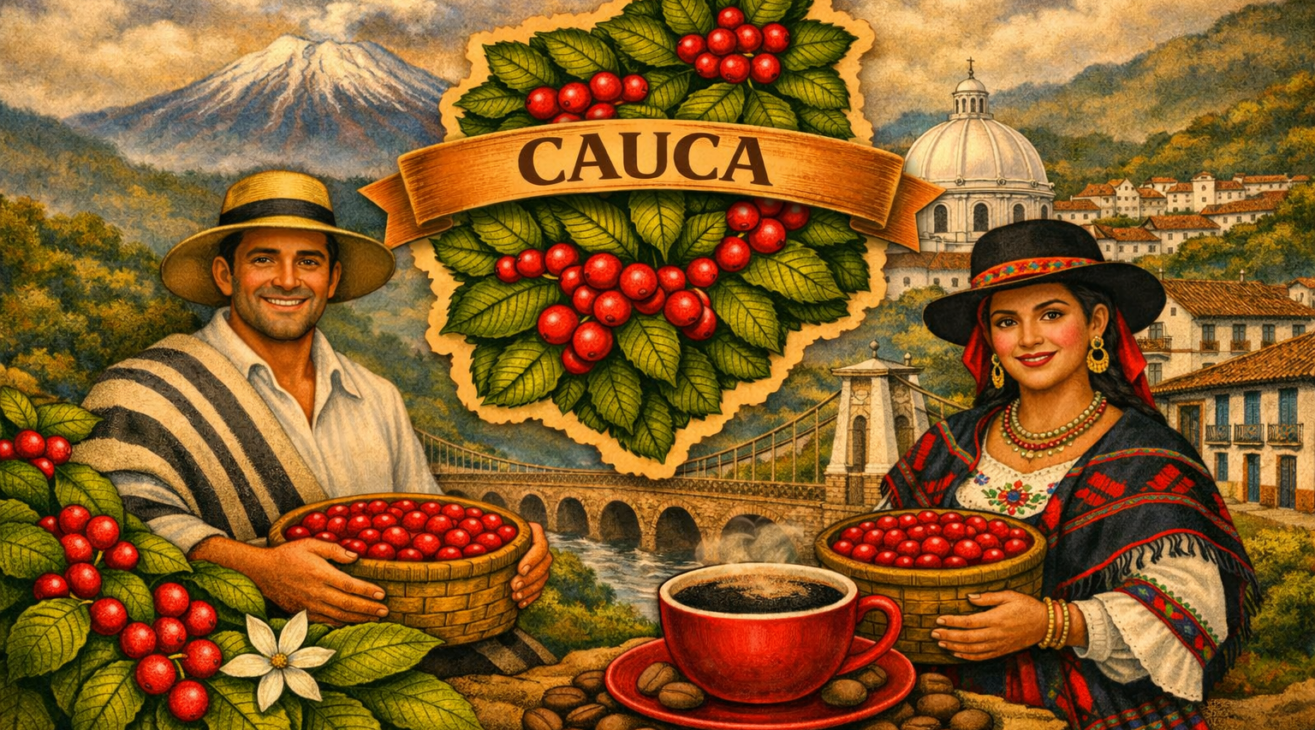
Cauca
Region 03 of 13
Southern Zone
Cauca
Indigenous Stewardship, Floral Complexity, and Coffee as Peace
Overview
Cauca occupies a geographically strategic position between Huila to the east and Nariño to the south, blending the floral complexity of the high Andes with the fruited sweetness and structured acidity of volcanic terroir. The Nasa and Misak indigenous peoples have stewarded these volcanic Andean slopes for generations, practicing an integrated form of agriculture that treats the land as a living organism. Cauca’s coffee story is deeply intertwined with the region’s history of conflict and peace: during the FARC occupation, many communities were displaced and farming disrupted. Coffee — particularly through indigenous cooperatives — became not only an economic lifeline but a vehicle for territorial recovery, cultural preservation, and reconciliation.
Coffee History
Coffee cultivation in Cauca predates commercial agriculture, introduced first through missionary and colonial networks in the 19th century but adopted most deeply by indigenous communities who integrated it into their existing agroforestry systems. The Nasa people of northern Cauca — particularly in the municipalities of Toribio, Caldono, and Morales — began organized coffee farming as a means of economic self-determination in the mid-20th century. The formation of cooperatives like Cencoic allowed Nasa communities to bypass exploitative middlemen and access international markets directly. During the height of FARC-era conflict in the 1990s and 2000s, many Cauca coffee communities were caught between armed groups; the 2016 Peace Agreement opened new pathways for export growth and direct-trade relationships with international roasters who valued the political and cultural narrative alongside the quality in the cup.
Climate & Geography
| Altitude | 1,700 – 2,100 m above sea level |
| Temperature | 14°C – 20°C (57°F – 68°F) |
| Rainfall | 1,600 – 2,000 mm/year; bimodal |
| Soil | Volcanic loam; rich in organic matter; ancient Andean Massif geology |
| Harvest seasons | Main: October – December; Mitaca: April – June |
| Key municipalities | Toribio, Caldono, Morales, El Tambo, Corinto, Almaguer, Popayán |
| Capital | Popayán — “The White City,” historic colonial center |
Coffee Varieties
- Caturra — Most widely cultivated; produces the floral brightness Cauca is known for
- Castillo — FNC rust-resistant hybrid; increasingly prevalent in newer plantings
- Colombia variety — Robust FNC hybrid; disease-resistant
- Bourbon — Heirloom; grown in small quantities for microlot programs
- Typica — Oldest genetics in some indigenous community farms; rare and valued
Major Farms & Collectives
- Cencoic (Central Cooperativa Indígena del Cauca) — Umbrella cooperative of 2,757 Nasa smallholder families across Toribio, Caldono, Morales, El Tambo, Corinto, and Almaguer; one of Latin America’s most-cited examples of indigenous coffee self-determination
- ASORCAFÉ — Regional specialty coffee association; provides technical support and connects producers to specialty export channels
- Nasa community farms — Toribío and Caldono — Direct community-owned farms; FAIRTRADE and organic certified; culturally documented by anthropologists
- Misak community farms — Silvia — Traditional farms integrating coffee with native crops; notable for biodiversity
Notable Associated Brands
- Trabocca (Amsterdam, Netherlands) — Major Dutch green coffee importer and long-term Cencoic partner; has funded infrastructure improvements in Cauca indigenous communities
- Nordic specialty roasters — Several Scandinavian roasters source indigenous Cauca microlots specifically for their ethical provenance and cup clarity
- U.S. third-wave roasters — Multiple U.S. roasters (including Verve, Onyx, and smaller operations) feature Cauca as a peace-coffee narrative origin
Flavor Profile
Tasting Notes — Cauca
Primary notes: Floral (jasmine, orange blossom), citrus brightness (lemon, orange), stone fruit (peach, apricot)
Secondary notes: Honey sweetness, toffee, caramel
Body: Medium; refined and controlled
Acidity: Bright, structured, citric
Finish: Clean, sweet, lingering florals
Processing: Washed (dominant); honey processing growing
Distinction: The floral-citrus-stone-fruit triad is Cauca’s signature — rarely replicated in other Colombian regions
Photo
Sources: Nawalee Coffee; LATAM Coffee Trip; Trabocca origin reports; Cencoic cooperative documentation; FNC departmental profiles.