Tolima: Colombia’s Hidden Highlands of Specialty Coffee
Nestled in the heart of Colombia’s Andean cordillera, Tolima is a region of striking contrasts — steep volcanic slopes, mist‑covered valleys, and fertile soils that have quietly produced some of the country’s most complex and celebrated coffees. Though overshadowed for decades by neighboring Huila and Caldas, Tolima has emerged as a powerhouse of organic, Fairtrade, and micro‑lot coffee, driven by smallholder collectives and a renewed focus on sustainable cultivation.
Geography and Climate
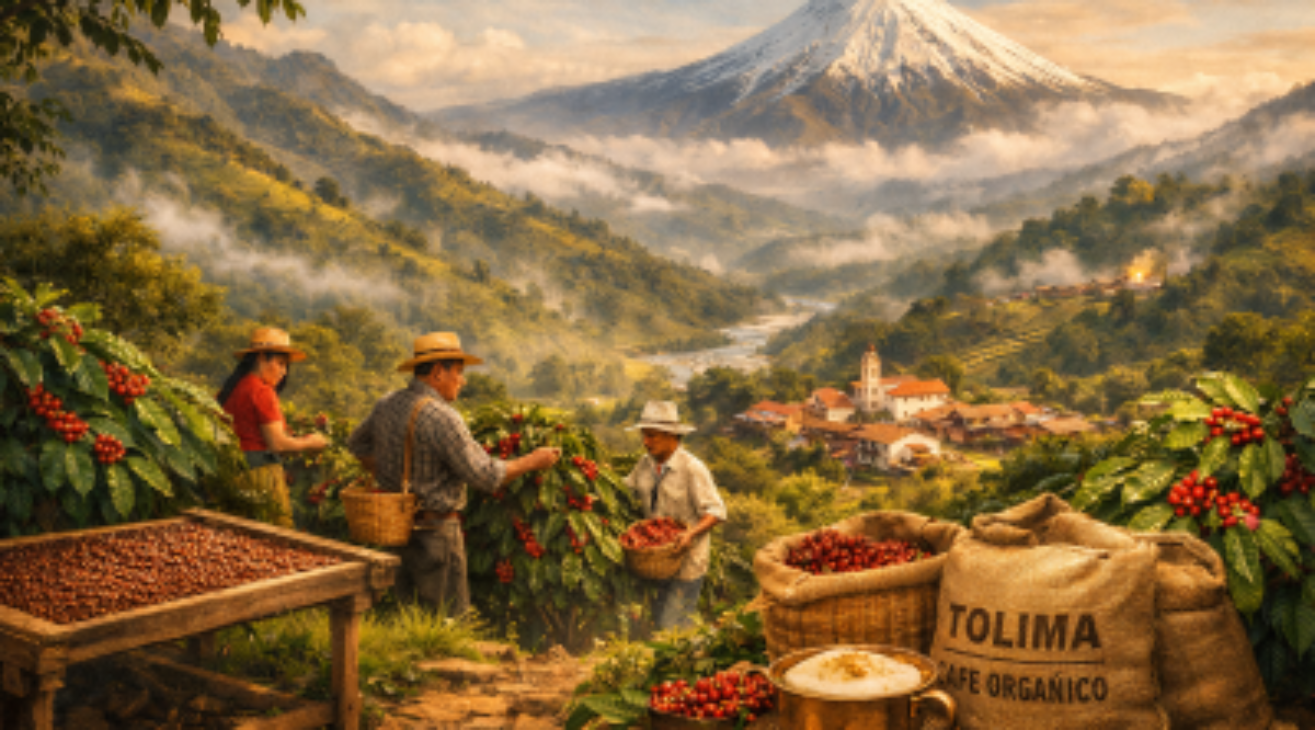
Tolima lies between the Central and Eastern ranges of the Andes, with elevations from 1,200 to 2,100 meters above sea level. The region’s diverse microclimates — shaped by the Magdalena River basin and the snow‑capped peaks of Nevado del Tolima — create ideal conditions for Arabica coffee. Volcanic soils rich in minerals, moderate rainfall, and cool nights contribute to slow cherry maturation, enhancing sweetness and acidity.
According to Colombia’s Federación Nacional de Cafeteros (FNC), Tolima’s coffee zones include Planadas, Ibagué, Líbano, and Chaparral, each with distinct flavor profiles. Planadas, in particular, has become synonymous with high‑altitude organic coffee, producing beans with medium acidity, rounded body, and notes of dark chocolate, mango, and peach.
Historical Roots
Coffee arrived in Tolima in the late 19th century, carried by settlers migrating from Antioquia and Cundinamarca. The rugged terrain limited large‑scale plantations, so cultivation remained in the hands of small family farms. Over time, these farmers formed cooperatives to share resources and improve quality. The region’s isolation — once a challenge — preserved traditional farming methods and fostered a strong sense of community.
During Colombia’s internal conflicts of the 20th century, Tolima’s coffee growers endured hardship but remained resilient. In the early 2000s, peace initiatives and agricultural programs helped revitalize production. Many farms transitioned to organic certification, emphasizing biodiversity and soil regeneration.
Farms and Collectives
One of Tolima’s most respected cooperatives is Café del Macizo, founded in 2003 in Planadas by 59 lifelong growers. The group’s mission is to produce high‑quality coffee through shared knowledge and sustainable practices. Their beans — primarily Caturra, Castillo, and Typica varietals — are washed and sun‑dried, reflecting the region’s artisanal approach.
Other notable collectives include ASOPEP (Asociación de Productores Ecológicos de Planadas) and ASPRASAR (Asociación de Productores Agropecuarios de Santa Rosa). These organizations have gained international recognition for their commitment to Fairtrade and organic standards, empowering farmers through education, direct trade, and community development.
Soil and Sustainability
Tolima’s volcanic soils are rich in phosphorus, potassium, and organic matter, essential for coffee plant health. Farmers often use shade trees such as guamo and plantain to protect coffee from direct sunlight and maintain ecological balance. The region’s emphasis on agroforestry supports pollinators and reduces erosion, while natural composting and manual weeding replace chemical fertilizers.
The result is a cup profile that reflects both terroir and philosophy — coffees that are clean, balanced, and deeply expressive of origin. Tolima’s producers see their work not merely as agriculture but as stewardship of creation, blending faith, family, and ecology into every harvest.
Recognition and Specialty Status
Tolima’s coffees have repeatedly earned top honors in Colombia’s Cup of Excellence competitions. In recent years, micro‑lots from Planadas and Líbano have scored above 88 points, praised for their complexity and fruit‑forward character. International roasters now seek Tolima beans for their traceability and ethical sourcing, making the region a cornerstone of Colombia’s specialty coffee renaissance.
Sources
- Federación Nacional de Cafeteros de Colombia (FNC), Regional Coffee Profiles: Tolima, 2023.
- Café del Macizo Cooperative, Planadas Tolima History and Mission, 2024.
- ASOPEP Cooperative, Organic Coffee Production in Tolima, 2023.
- Cup of Excellence Colombia, Winning Producers and Regional Data, 2022.
- Pendergrast, Mark. Uncommon Grounds: The History of Coffee and How It Transformed Our World, Basic Books, 2010.