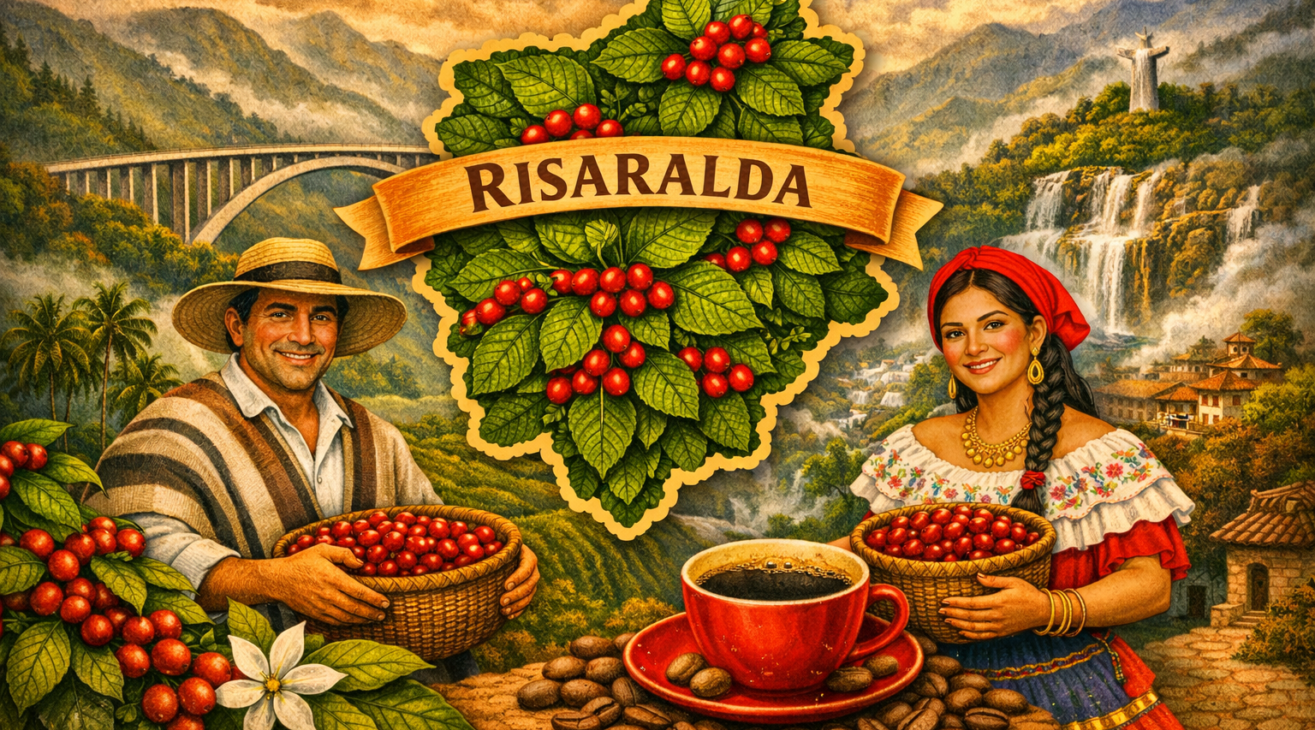
Risaralda
Region 08 of 13
Central Zone — Eje Cafetero
Risaralda
Balance and Tradition in the Coffee Triangle — Pereira’s Gateway to Heritage
Overview
Risaralda completes the celebrated Coffee Triangle — the geographic and cultural triad of Caldas, Quindío, and Risaralda that forms the nucleus of the UNESCO Coffee Cultural Landscape. Its capital Pereira is the largest, most economically dynamic city in the Eje Cafetero — a commercial hub and transport nexus connecting the coffee triangle to the rest of Colombia. Like Quindío, Risaralda was devastated by the 1999 earthquake (magnitude 6.4), which killed over 1,100 people and displaced tens of thousands. The resilience of coffee-farming communities — buttressed by FNC support systems and international coffee market premiums — was central to the region’s rapid recovery. Risaralda’s proximity to Los Nevados National Park, the Termales de Santa Rosa de Cabal thermal springs, and the UNESCO landscape makes it a destination for nature and coffee tourism.
Coffee History
Settled by paisa migrants from Antioquia in the 19th century, Risaralda was carved out as a separate department from Caldas only in 1966. Despite its youth as an administrative entity, its coffee history is as deep as Caldas — sharing the same paisa colonization heritage, the same FNC cooperative infrastructure, and the same UNESCO-recognized cultural landscape. Pereira’s commercial networks and the Matecaña International Airport have made Risaralda a logistics hub for coffee exports from the broader Eje Cafetero, with buyers flying in directly to source lots from across the triangle. The department produces consistent, high-quality washed coffees that are the reliable backbone of the Café de Colombia brand.
Climate & Geography
| Altitude | 1,200 – 1,800 m above sea level |
| Temperature | 18°C – 25°C (64°F – 77°F); warm and consistently humid |
| Rainfall | 2,000 – 3,500 mm/year; among the wettest in the triangle |
| Soil | Volcanic loam; rich organic matter; high moisture retention |
| Harvest seasons | Main: October – January; Mitaca: April – June |
| Key municipalities | Marsella, Santuario, Santa Rosa de Cabal, Balboa, Belén de Umbría |
| Capital | Pereira (1,411 m) — largest city in the Eje Cafetero |
| Designations | UNESCO Coffee Cultural Landscape (2011) |
Coffee Varieties
- Caturra — Traditional dominant variety; the classic Risaralda cup
- Castillo — FNC rust-resistant hybrid; widely distributed
- Colombia variety — Significant presence in mid-altitude farms
Major Farms & Collectives
- Villa Carmen Plantation (Tribunas village, Pereira) — Large, well-documented coffee plantation near Pereira; a key reference farm for the region’s profile and visitor education programs
- Otún Quimbaya Nature Reserve farms — Coffee farms within or adjacent to the reserve; biodiversity-certified and shade-grown
- FNC-affiliated cooperatives — Multiple departmental cooperatives in Marsella and Santuario; quality-standard enforcement hubs
Notable Associated Brands
- Juan Valdez / FNC — Deeply embedded in Risaralda’s cooperative structure
- Café de Colombia — FNC umbrella brand; Risaralda coffees contribute substantially to blends
- Specialty buyers in the Americas and Europe — Risaralda serves as a reliable, consistent supply source for specialty blends and single-origin features
Flavor Profile
Tasting Notes — Risaralda
Primary notes: Smooth caramel, mild citrus (lemon peel, tangerine), light toffee
Secondary notes: Brown sugar, toasted grain, mild stone fruit
Body: Medium; smooth, consistent
Acidity: Soft, moderate, clean
Finish: Sweet, clean, crowd-pleasing
Processing: Washed (universal)
Distinction: Reliable consistency and approachability; the dependable heart of the Coffee Triangle profile
Photo
Sources: Broken Boots Travel; Wikipedia; Colombia Travel; FNC; UNESCO Coffee Cultural Landscape documentation.