Quindio
Region 07 of 13
Central Zone — Eje Cafetero
Quindío
The Cultural Heart of Coffee Country — Agritourism, Heritage, and Valle de Cocora
Overview
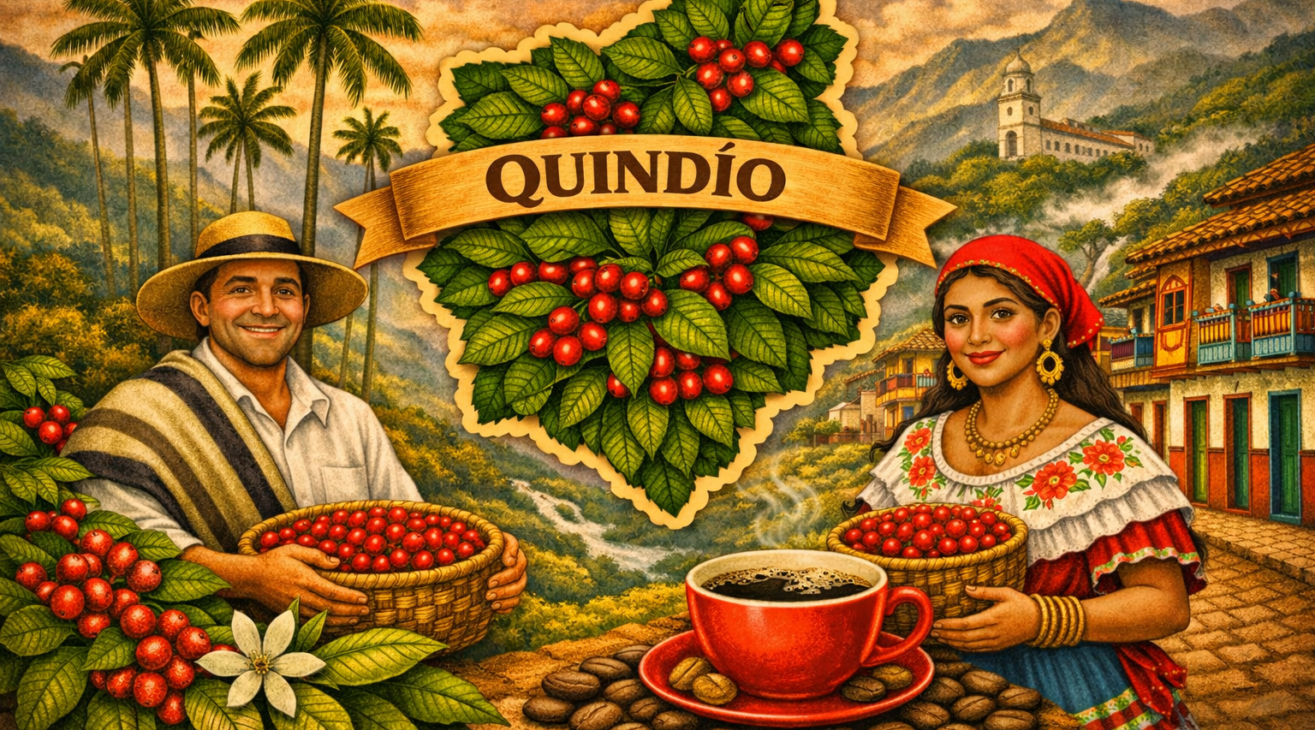
Quindío is the cultural soul of Colombia’s coffee country and its most-visited department for coffee agritourism. Though the smallest department in Colombia by area, Quindío concentrates more heritage coffee culture per square kilometer than anywhere else in the country. The colonial town of Salento — perched in the hills above the iconic Valle de Cocora with its towering Quindío wax palms (Colombia’s national tree) — is the most photographed setting in the Colombian coffee landscape. Hacienda tourism — staying in converted coffee farms, participating in harvests, learning wet-milling by hand — has become Quindío’s defining economic activity alongside coffee production itself. The department balances specialty coffee production with a thriving rural tourism industry that has become a model for agricultural heritage preservation across Latin America.
Coffee History
Coffee arrived in Quindío through the paisa colonization movement of the mid-to-late 19th century. The FNC’s 1927 formation gave Quindío producers institutional support, and the department became part of the organized export economy that funded Colombia’s 20th-century development. Armenia, the capital, was virtually destroyed by a magnitude 6.2 earthquake in January 1999 — one of Colombia’s worst natural disasters — killing over 1,000 people and damaging 75% of the city. Coffee revenues and the government’s Fondo para la Reconstrucción del Eje Cafetero (FOREC) funded reconstruction, demonstrating coffee’s role as a resilience mechanism. The 2011 UNESCO Coffee Cultural Landscape designation — which placed Quindío at its center — transformed the department’s global profile and accelerated coffee tourism investment.
Climate & Geography
| Altitude | 1,200 – 1,800 m above sea level |
| Temperature | 17°C – 23°C (63°F – 73°F); mild and consistent |
| Rainfall | 2,000 – 2,800 mm/year; bimodal |
| Soil | Volcanic loam; rich, dark Andean soils |
| Harvest seasons | Main: October – January; Mitaca: April – June |
| Key municipalities | Salento, Filandia, Pijao, Buenavista, Montenegro, Calarcá |
| Capital | Armenia (1,483 m) — rebuilt after 1999 earthquake |
| Designations | UNESCO Coffee Cultural Landscape (2011) |
Coffee Varieties
- Caturra — Traditional dominant variety in heritage haciendas
- Castillo — Prevalent in post-roya replanting programs
- Colombia variety — FNC hybrid; widely distributed
Major Farms & Collectives
- Hacienda Venecia (Manizales, adjacent region; culturally linked to Quindío agritourism circuit) — Internationally recognized heritage hacienda; award-winning specialty lots; pioneering agritourism model cited in global coffee media
- Hacienda Combia — Historic estate with full visitor experience; specialty production and agritourism
- Agritourism fincas — Salento, Filandia, Pijao, Buenavista — Dozens of smaller family-operated coffee farms offering immersive tourism experiences
- Parque del Café (Montenegro) — Themed cultural park dedicated to Colombian coffee history, processing, and culture
Notable Associated Brands
- Juan Valdez / FNC — Core Eje Cafetero territory; FNC infrastructure deeply embedded
- Café de Colombia — FNC origin umbrella brand prominent in Quindío marketing
- Hacienda Venecia — Internationally recognized for agritourism and specialty lots; ships internationally
Flavor Profile
Tasting Notes — Quindío
Primary notes: Caramel sweetness, mild citrus (lemon, orange), brown sugar
Secondary notes: Toasted nuts, mild stone fruit
Body: Medium; smooth, clean
Acidity: Balanced, moderate, pleasant
Finish: Clean, sweet, smooth
Processing: Washed (traditional hacienda processing)
Distinction: Heritage farm refinement and agritourism provenance; the classic Colombian profile with a cultural story attached
Photo
Sources: Colombia My Way; Broken Boots Travel; Wikipedia; FNC; UNESCO Coffee Cultural Landscape documentation; Hacienda Venecia.