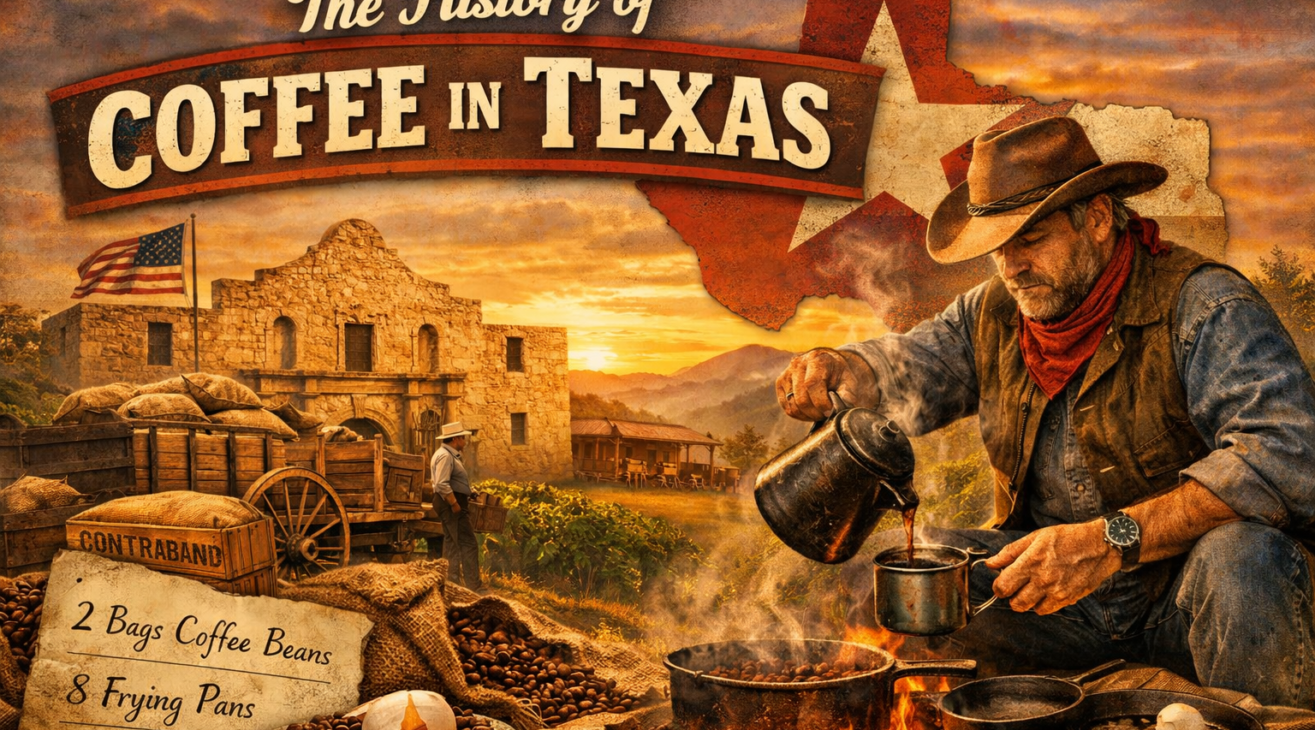
☕ The History of Coffee in Texas: Contraband Beans, Cowboy Brew, and a Revolution Fueled by Caffeine
☕ The History of Coffee in Texas: Contraband Beans, Cowboy Brew, and a Revolution Fueled by Caffeine
🌵 Frontier Beginnings
Coffee reached Texas long before statehood, back when the region was still under Mexican rule. In the early 1830s, coffee was a luxury import—scarce, expensive, and subject to steep Mexican taxes. Texans, being Texans, didn’t take kindly to paying those duties. Mexican officials repeatedly accused settlers of smuggling coffee across the border, calling it contraband coffee.
Whether carried by traders, hidden in wagons, or slipped across the Rio Grande under cover of night, coffee became a quiet symbol of Texan defiance.
📜 The Alamo’s Coffee Mystery
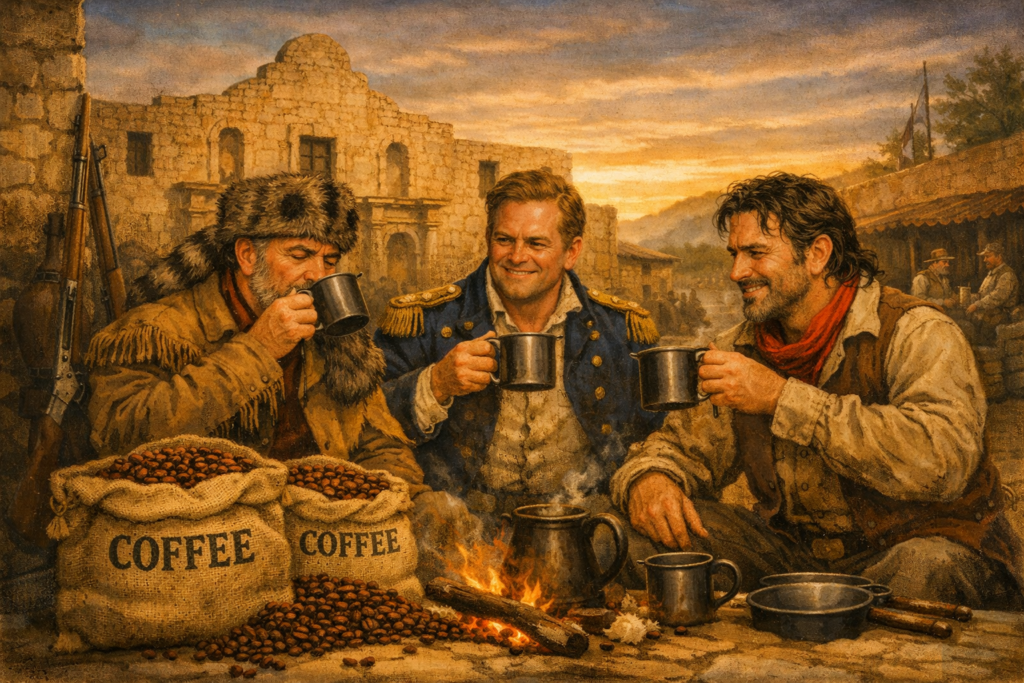
Among the surviving Alamo inventory records is a curious entry:
two large bags of coffee beans and eight frying skillets.
No one admitted to smuggling them. No explanation was given for how they arrived. But the fact that coffee was present inside the Alamo during the siege tells you everything about Texan priorities. Even in wartime, a good cup of coffee mattered.
m
🌎 Colombia’s First Exports and a Texas Coincidence
Colombia officially began exporting coffee just one year before the Texas Revolution (1835).
Oddly, there are no surviving records showing where those first Colombian shipments landed—no port logs, no customs notes, no merchant receipts.
But given the timing, it’s entirely possible that some of the earliest Colombian coffee ever exported ended up—legally or otherwise—in the cups of Texan settlers.
If tea sparked the American Revolution, then coffee helped spark the Texas Revolution. Texans weren’t dumping tea into harbors—they were quietly brewing contraband coffee on the frontier.
🤠 Cowboy Coffee: The Brew That Built the West
After independence, coffee became the lifeblood of the Texas cowboy. On cattle drives and around chuckwagons, cowboy coffee was brewed the simplest—and toughest—way possible:
- Toss coarse grounds straight into a pot of boiling water
- Let it roll over the fire
- Remove from heat and let the grounds settle
- Pour carefully (or don’t)
To help the grounds sink, cowboys often added a crushed eggshell into the pot. The calcium helped clarify the brew and pull the floating grounds to the bottom, making the coffee smoother and less bitter.
It was strong, smoky, and sometimes gritty enough to chew. Cowboys joked that if a horseshoe could float in it, the coffee was perfect.
🏜️ From Contraband to Culture
By the late 1800s, coffee was no longer contraband—it was culture. Texas towns grew around rail lines and trading posts where coffee was served in:
- Saloons
- General stores
- Church gatherings
- Ranch kitchens
- Military outposts
Coffee became a symbol of hospitality, hard work, and community. It fueled ranchers at dawn, soldiers on campaign, and families gathered around the table.
☕ Modern Texas Coffee: A New Frontier
Today, Texas is one of the most vibrant coffee states in America. The Lone Star State is home to:
- 400+ coffee roasters
- 2,000+ cafés and coffee shops
- A booming specialty‑coffee scene in Austin, San Antonio, Houston, and Dallas
- A growing number of Texas‑based brands sourcing directly from Colombia and other origins
From small‑town cafés to world‑class roasters, Texans continue to celebrate coffee as both a daily ritual and a nod to their rebellious roots.
🌄 A Brew That Helped Shape a Nation
From smuggled sacks to cowboy pots, coffee has been part of Texas’s story from the beginning. It fueled revolutionaries, ranchers, and dreamers—and it still fuels the spirit of independence that defines Texas today.