Norte de Santander
Region 12 of 13
Northern Zone
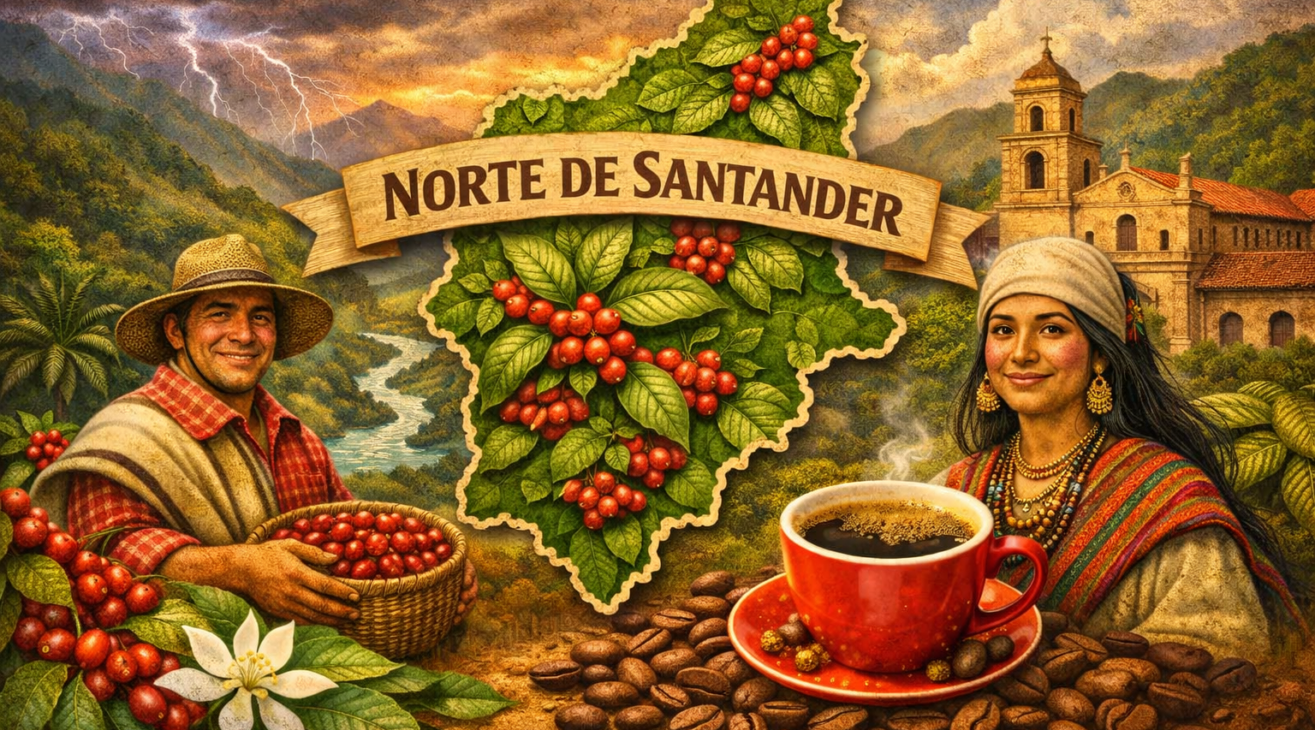
Norte de Santander
The Birthplace of Colombian Coffee — Where it All Began
Overview
Norte de Santander holds a distinction shared by no other Colombian department: it is the birthplace of Colombia’s commercial coffee industry. Coffee was introduced here from Venezuela in the early 19th century — and in 1808, the first crops were exported back through Venezuela to Atlantic markets, making Norte de Santander the origin of Colombia’s coffee export story. The municipality of Salazar de las Palmas is formally recognized as the site of Colombia’s first commercial coffee plantation. Today approximately 12,000 small-scale farming families cultivate coffee across the department’s diverse Andean microclimates, and a new generation of producers is transforming Norte de Santander’s image from a historic curiosity to a cutting-edge specialty origin through innovations like anaerobic natural fermentation.
Coffee History
The exact origin of Colombian coffee is traced to Norte de Santander. Venezuelan merchants and Jesuit missionaries introduced Coffea arabica plants through the Táchira region of Venezuela — which shares a porous border with Norte de Santander — in the late 18th century. By 1808, organized commercial cultivation had reached sufficient scale for export, and Norte de Santander merchants shipped coffee northward through Venezuela to Caribbean ports. The discovery of the fertility of the Andean slopes around Cúcuta and Salazar de las Palmas drove rapid expansion, and Norte de Santander remained a significant coffee producer through the 19th and early 20th centuries. Internal conflicts — the Thousand Days’ War and subsequent violence — disrupted production cycles, but the region’s historic identity was preserved. The modern specialty movement arrived late but forcefully: La Peligrosa Farm’s appearance on international specialty platforms demonstrated that Norte de Santander could compete in premium markets.
Climate & Geography
| Altitude | 900 – 1,600 m above sea level |
| Temperature | 19°C – 26°C (66°F – 79°F); warm, diverse microclimates |
| Rainfall | 1,200 – 1,800 mm/year; bimodal |
| Soil | Volcanic loam and clay; diverse geological composition near Venezuelan border |
| Harvest seasons | Main: October – December; Mitaca: April – May |
| Key municipalities | Salazar de las Palmas (historic), Arboleda, Gramalote, El Zulia, Teorama |
| Capital | Cúcuta (308 m) — major border city and trade hub |
Coffee Varieties
- Castillo — Most prevalent modern variety
- Tabi — FNC hybrid (Typica × Bourbon × Timor); large-beaned; complex profile
- Cenicafé 1 — Newest FNC rust-resistant hybrid; gaining adoption
- Typica — Heirloom; found in oldest farms near Salazar de las Palmas; historic genetic material
- Caturra — Traditional high-yielding variety; widespread in older plantings
Norte de Santander’s new generation of producers has embraced experimental post-harvest processing — particularly anaerobic natural fermentation — as a pathway to premium market access. La Peligrosa Farm’s anaerobic natural lots (scoring 86.5 SCA) have demonstrated that this northern border region can produce internationally competitive specialty coffee.
Major Farms & Collectives
- La Peligrosa Farm (Elmer Rasmith Buitrago, Arboleda municipality) — Third-generation family farm; pioneering anaerobic natural fermentation; SCA score 86.5; featured on Algrano and international specialty platforms
- FEDECAFÉ cooperatives — Departmental cooperative network; manages quality programs and export logistics
- Salazar de las Palmas producer groups — Organized smallholder groups near Colombia’s first commercial plantation site; heritage documentation efforts underway
Notable Associated Brands
- Monserrate Nº1 — Specialty micro-lot brand sourcing Norte de Santander fermentation experimental lots for European markets
- Algrano (Zurich, Switzerland) — Swiss green coffee platform featuring La Peligrosa and other Norte de Santander lots
- European specialty importers — Growing interest from German and UK specialty buyers drawn by fermentation-forward profiles
Flavor Profile
Tasting Notes — Norte de Santander
Washed lots: Chocolate, caramel, medium body, bright citrus, clean finish
Natural / Anaerobic lots: Wine-like, red fruits (blackberry, raspberry), silky body, complex layering
Body: Medium (washed) to full and silky (natural/anaerobic)
Acidity: Bright citric (washed); medium citrus with fruit complexity (natural)
Finish: Clean (washed); lingering red fruit (natural/anaerobic)
Processing: Traditional washed and emerging natural/anaerobic natural
SCA: Anaerobic natural lots: 86.5 (La Peligrosa, documented)
Photo
Sources: Cafe Colombian Roast; Caffelleria News; Monserrate Nº1; Algrano (La Peligrosa Farm profile); FNC; historical records of Colombian coffee origins.
Region 13 of 13